Engineering Thermal Relief: The Austin Shade Deck, Walked Through Slide by Slide
Austin summers are not a season — they are an endurance test. When the thermometer crosses 100 degrees, an unprotected patio stops being an outdoor living space and becomes a heat trap. That is the problem this ten-slide deck takes on, and it is the reason so many Central Texas homeowners are rethinking their backyards entirely. This walkthrough follows the deck slide by slide, the way a designer walks a client through a set of plans: the climate problem, the science of shade, the material decision, the contractor risk, and the path to a yard that works twelve months a year.
Austin Outdoor Kitchens Explainer - published guidance, explained without the sales pitch.
Slide 1 — Engineering Thermal Relief
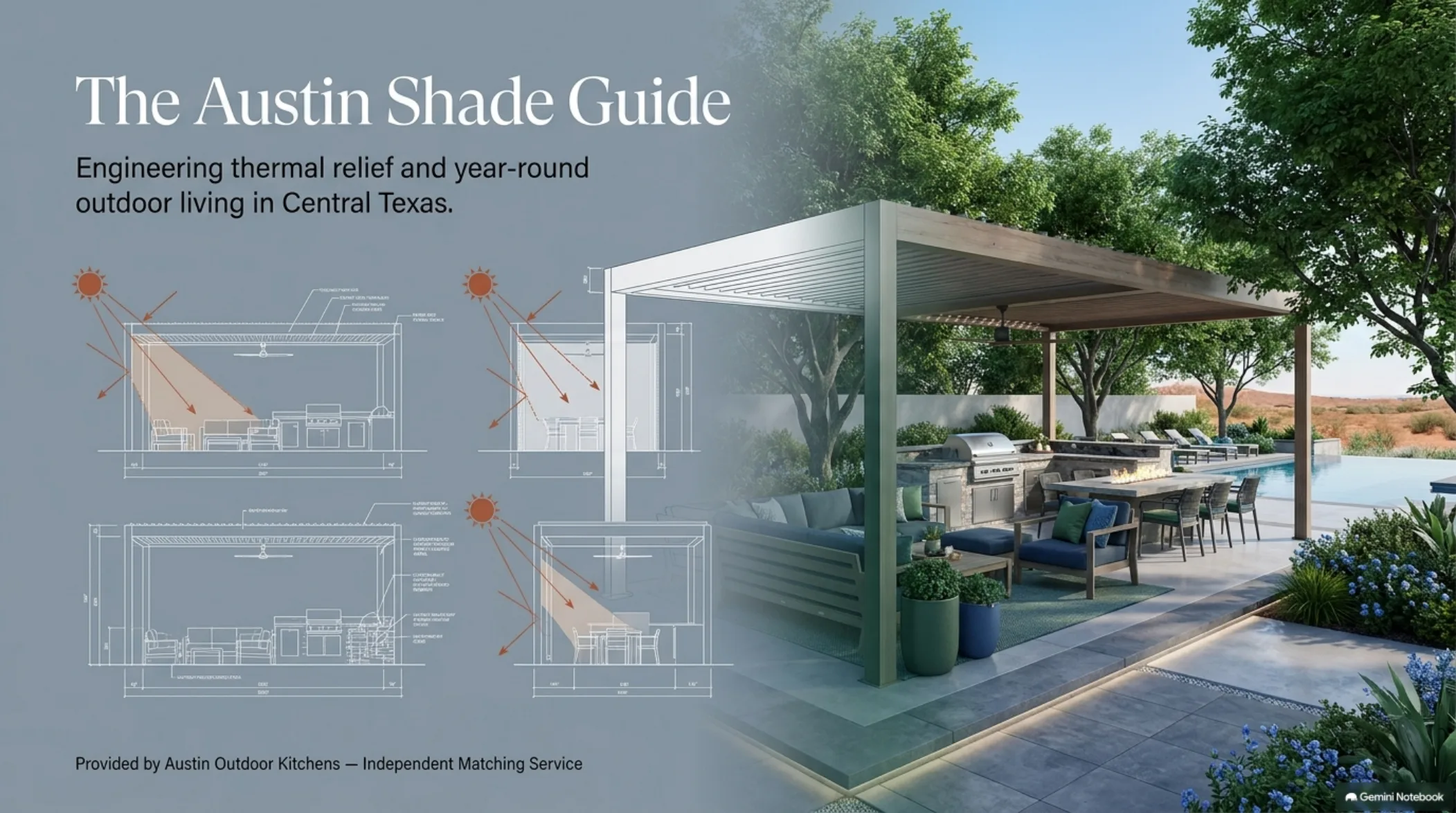
The opening slide states the mission plainly: engineering thermal relief and year-round outdoor living in Central Texas. The word "engineering" is deliberate. A pergola is not decoration — it is a climate-control structure. And the deck comes from Austin Outdoor Kitchens, an independent matching service that connects homeowners with pre-vetted builders, which frames everything that follows: the advice is structure-first, and the execution is contractor-first.
The short version
- The ten-slide deck's thesis is that outdoor living in Central Texas is an engineering problem rather than a furniture problem, and that a pergola is a climate-control structure rather than decoration.
- One slide states that 100-plus-degree days render unprotected outdoor living spaces completely unusable, and concludes that shade is the essential missing component rather than a nice-to-have.
- The 'Shade Effect' slide argues that without intervention the usable outdoor season compresses to a few shoulder-season months, and that strategic shade reclaims five-plus months while adding livable square footage to the home.
- Cedar pergolas provide active airflow, dappled light, UV filtering and maximum upward heat escape but need periodic maintenance, while aluminum patio covers deliver total thermal and rain blockage with airflow trapped unless ceiling fans are integrated.
- The deck's three-step funnel is: describe your project, get matched with up to three pre-vetted Austin pros within one business day, then compare and choose with zero obligation to hire.
- The synthesis slide states the equation directly: custom shade strategy plus pre-vetted craftsmanship equals year-round Austin outdoor living, because the right structure built by the wrong hands still fails.
Slide 2 — The Unusable Summer
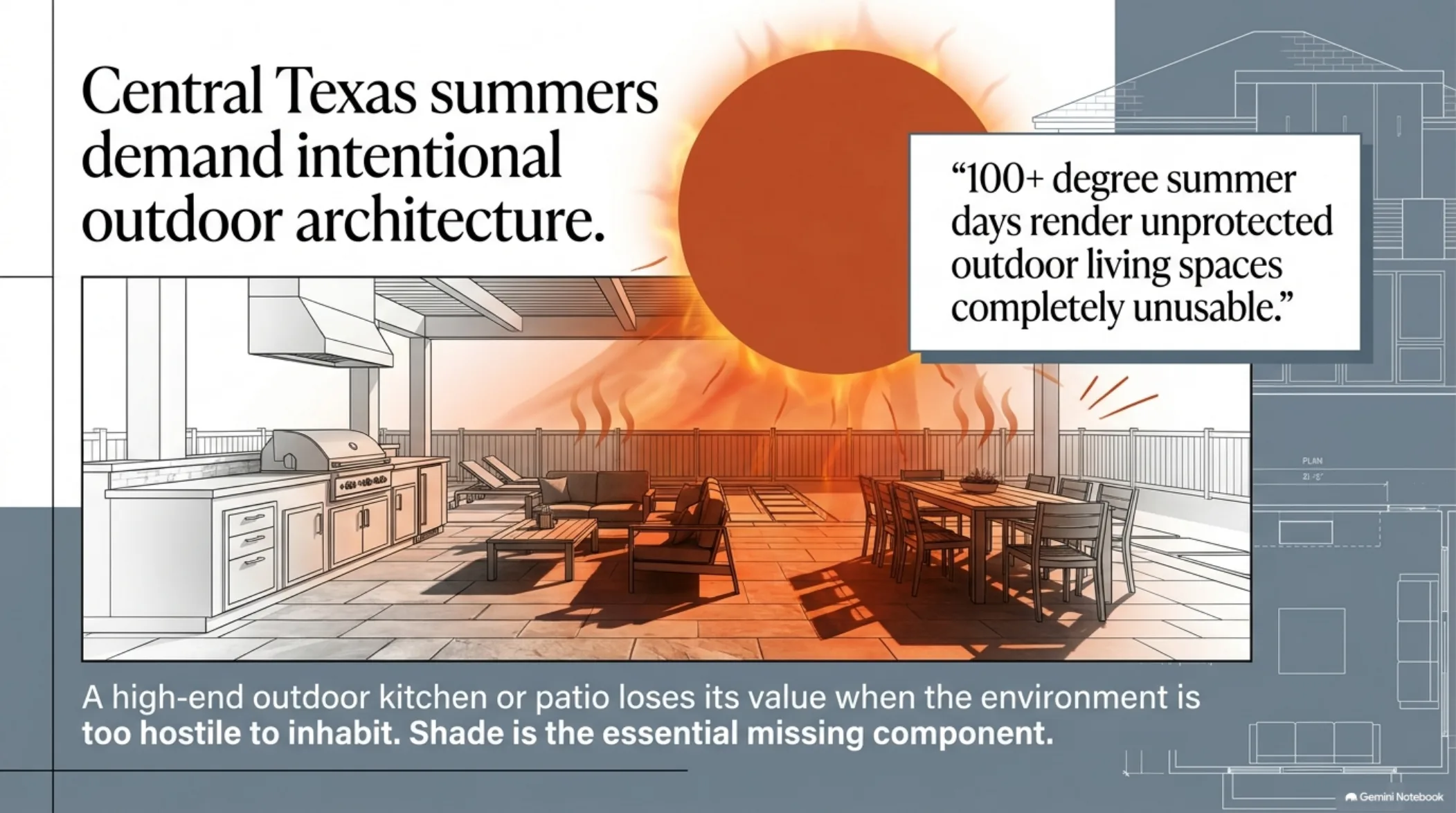
The second slide delivers the cold truth: Central Texas summers demand intentional design because 100-plus-degree days render unprotected outdoor living spaces completely unusable. A high-end outdoor kitchen or patio loses its value when the environment is too hostile to inhabit. The deck's conclusion here is pointed — shade is the essential missing component. Not a nice-to-have. The essential one.
Slide 3 — The Shade Effect
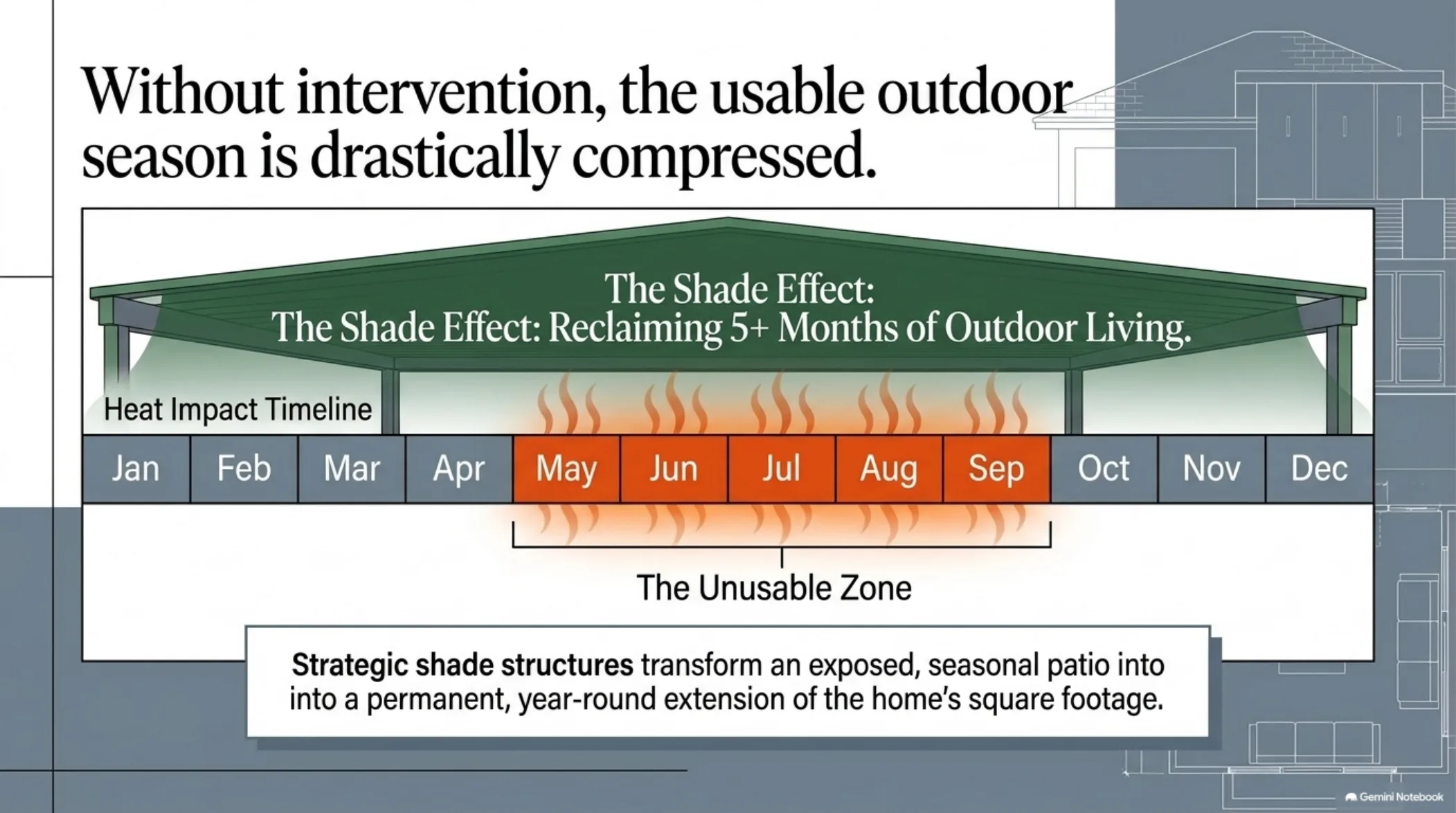
Without intervention, the usable outdoor season in Central Texas is drastically compressed — a few shoulder-season months that bracket a long unusable summer. The deck calls the fix "The Shade Effect": reclaiming five-plus months of outdoor living. The heat-impact timeline on the slide shows how strategic shade structures transform an exposed, seasonal patio into a permanent, year-round extension of the home's square footage. That last phrase matters — square footage. In real-estate terms, shade adds livable space.
Slide 4 — The Heat Shield Effect
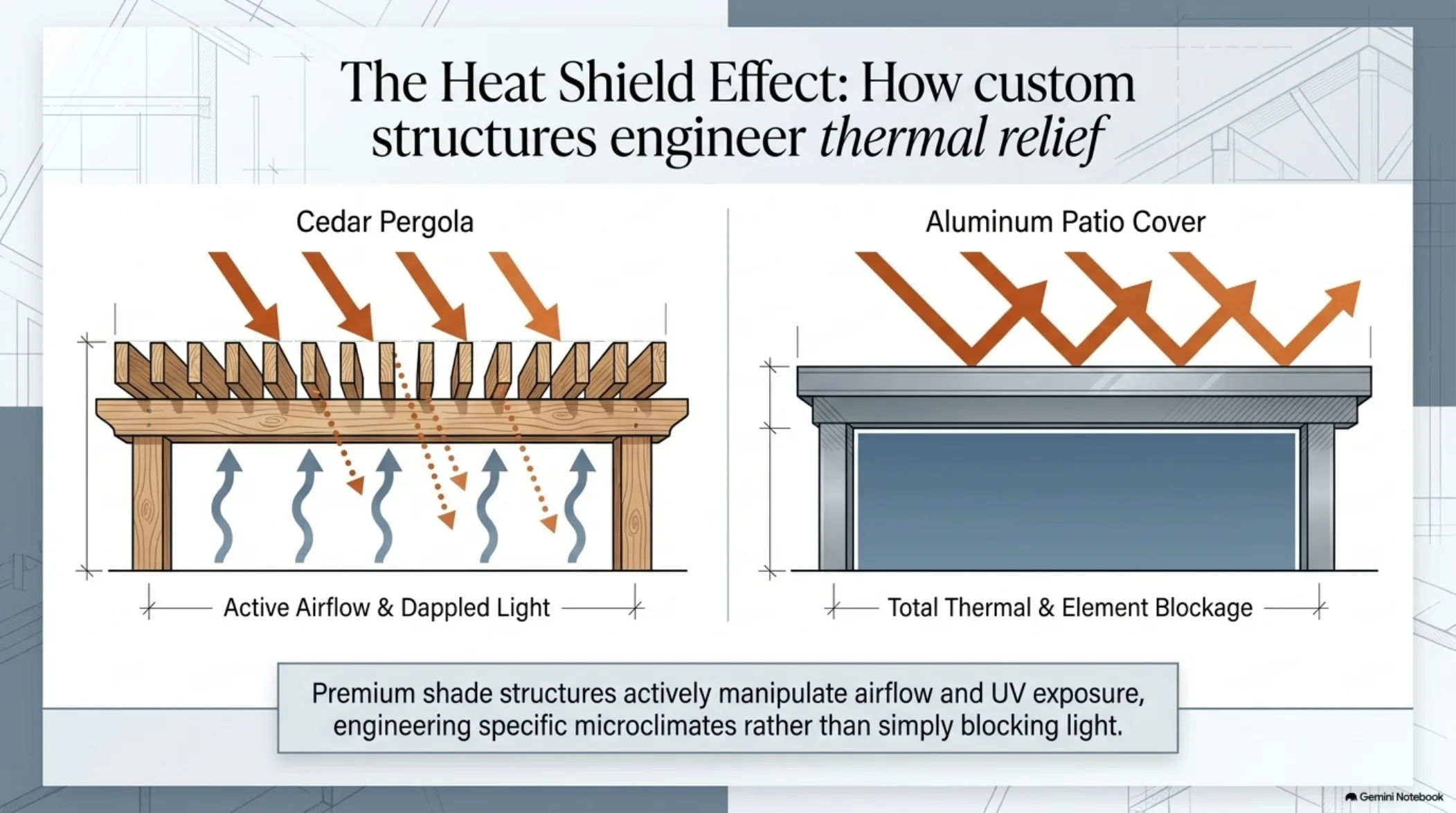
This slide is the science lesson, and it separates the two main structural families. A cedar pergola provides active airflow and dappled light — it manipulates the environment rather than sealing it off. An aluminum patio cover delivers total thermal and element blockage — a complete lid. The key phrase is "engineering specific microclimates": premium shade structures actively manipulate airflow and UV exposure rather than simply blocking light. Different goals, different structures.
Slide 5 — Choosing the Right Structure
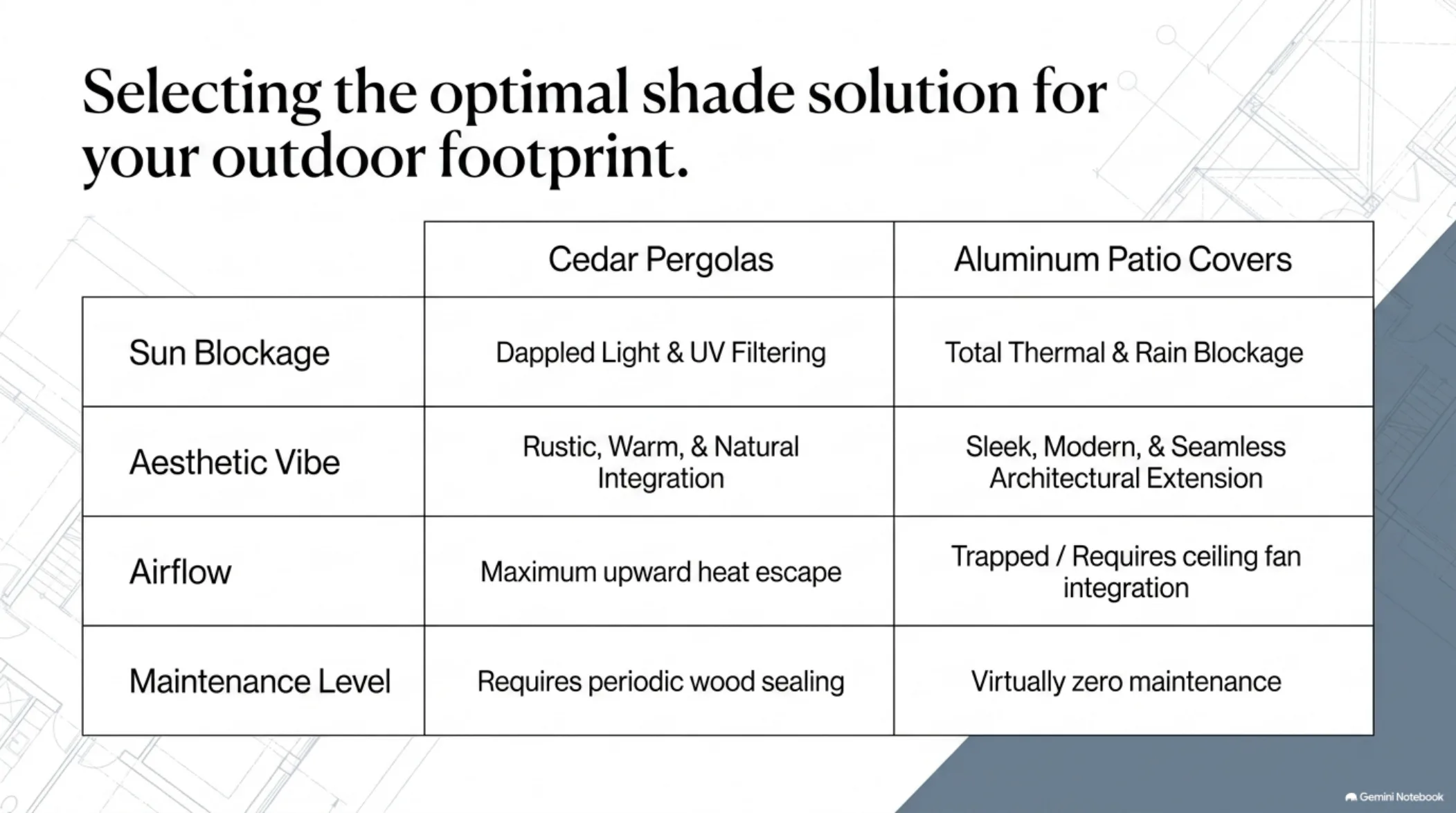
The decision slide puts the two options head to head. Cedar pergolas: dappled light and UV filtering, a rustic warm natural aesthetic, maximum upward heat escape, and a maintenance requirement that needs periodic attention. Aluminum patio covers: total thermal and rain blockage, a sleek modern seamless architectural extension, airflow that is trapped unless ceiling fans are integrated. There is no universal winner — the right answer depends on the homeowner's climate goals, style, and tolerance for upkeep.
Slide 6 — The Contractor Hunt
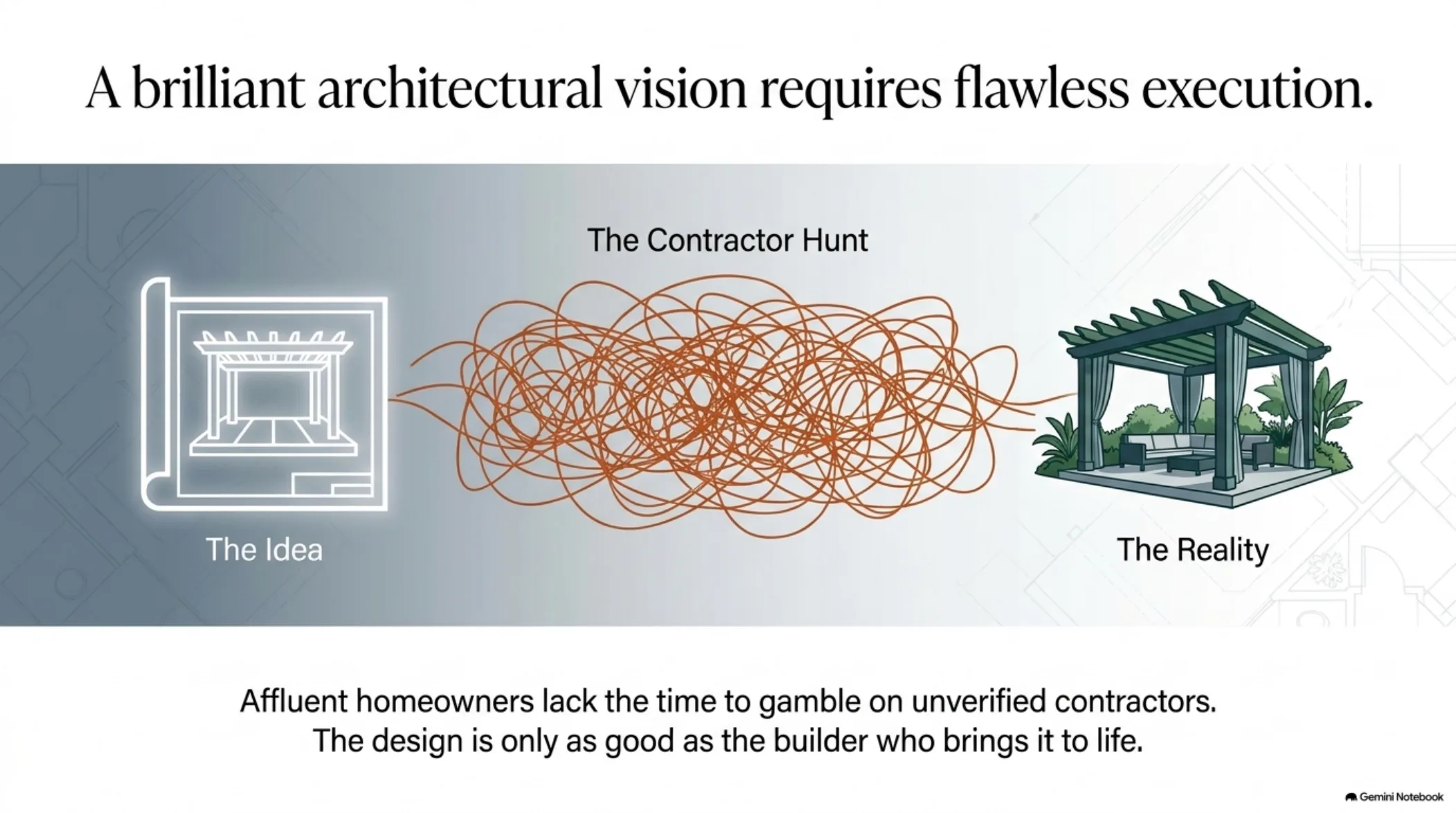
Here the deck pivots from design to execution with a stark illustration: the gap between The Idea and The Reality. Affluent homeowners lack the time to gamble on unverified contractors — and the design is only as good as the builder who brings it to life. A brilliant architectural vision fails in the hands of the wrong crew. This is the slide that sets up the service at the heart of the deck.
Slide 7 — The 3-Step Pre-Vetting Funnel
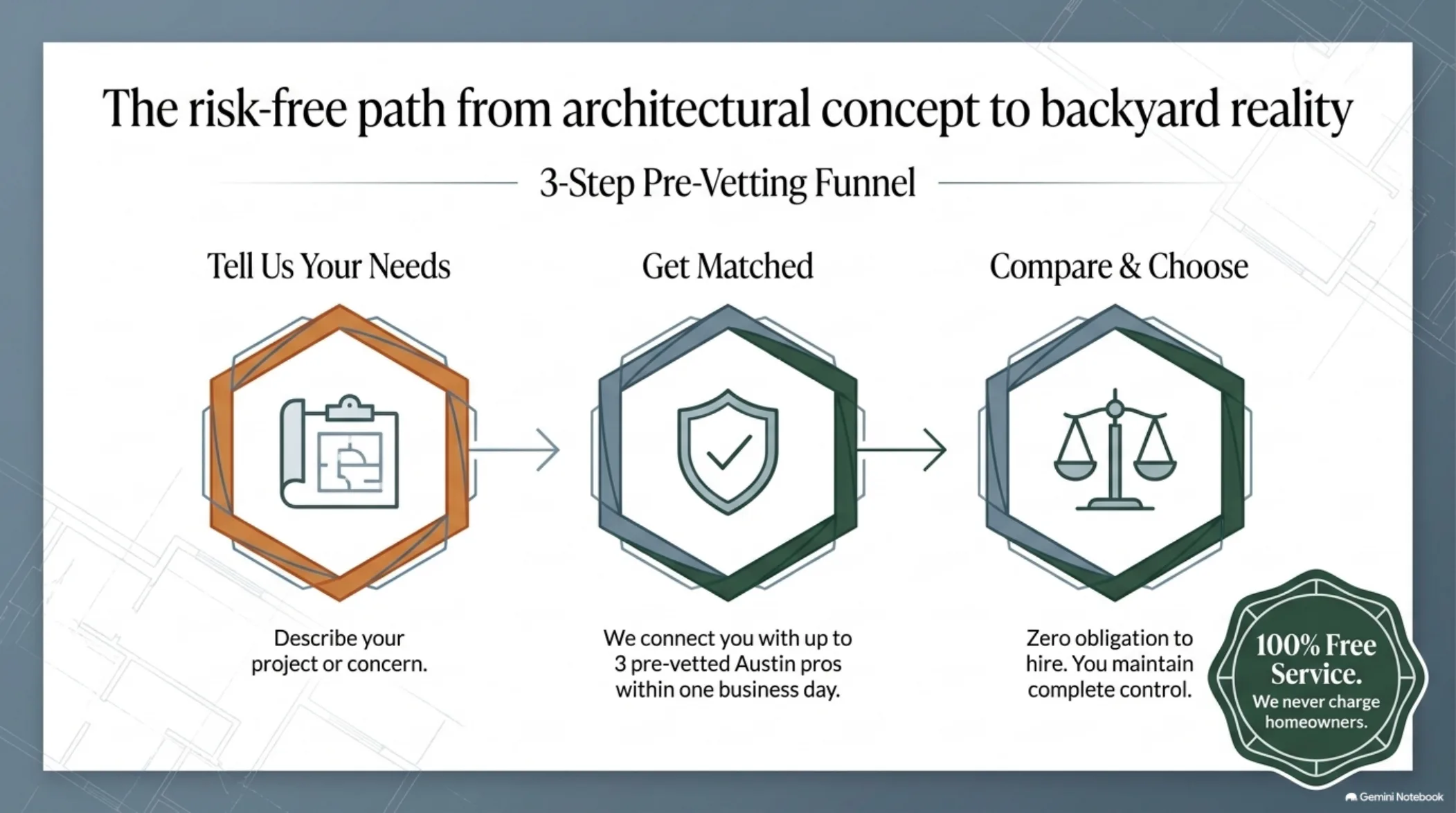
The solution arrives as a three-step funnel. Step one: tell the service about the project or concern. Step two: get matched with up to three pre-vetted Austin pros within one business day. Step three: compare and choose — with zero obligation to hire. The homeowner maintains complete control throughout. The risk, the deck argues, is not in choosing among vetted builders; the risk is choosing among unvetted ones alone.
Slide 8 — Pre-Vetted Craftsmanship
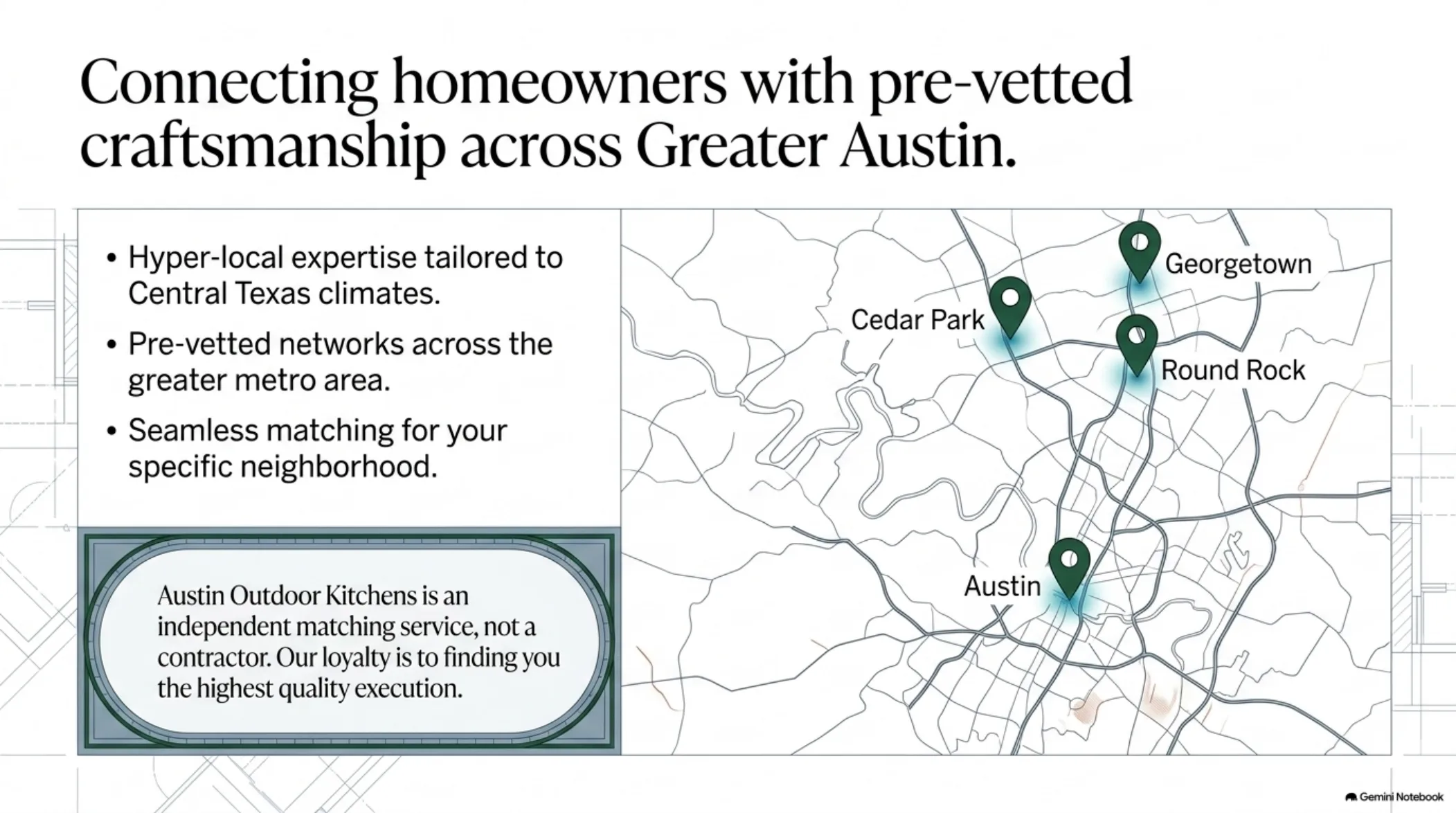
The network slide grounds the service geographically: hyper-local expertise tailored to Central Texas climates, pre-vetted networks across the greater metro, and seamless matching for specific neighborhoods — from Cedar Park to the rest of the region. And an important transparency note: Austin Outdoor Kitchens is an independent matching service, not a contractor. Its loyalty is to finding the homeowner the right builder, not to filling its own crews.
Slide 9 — The Oasis Equation
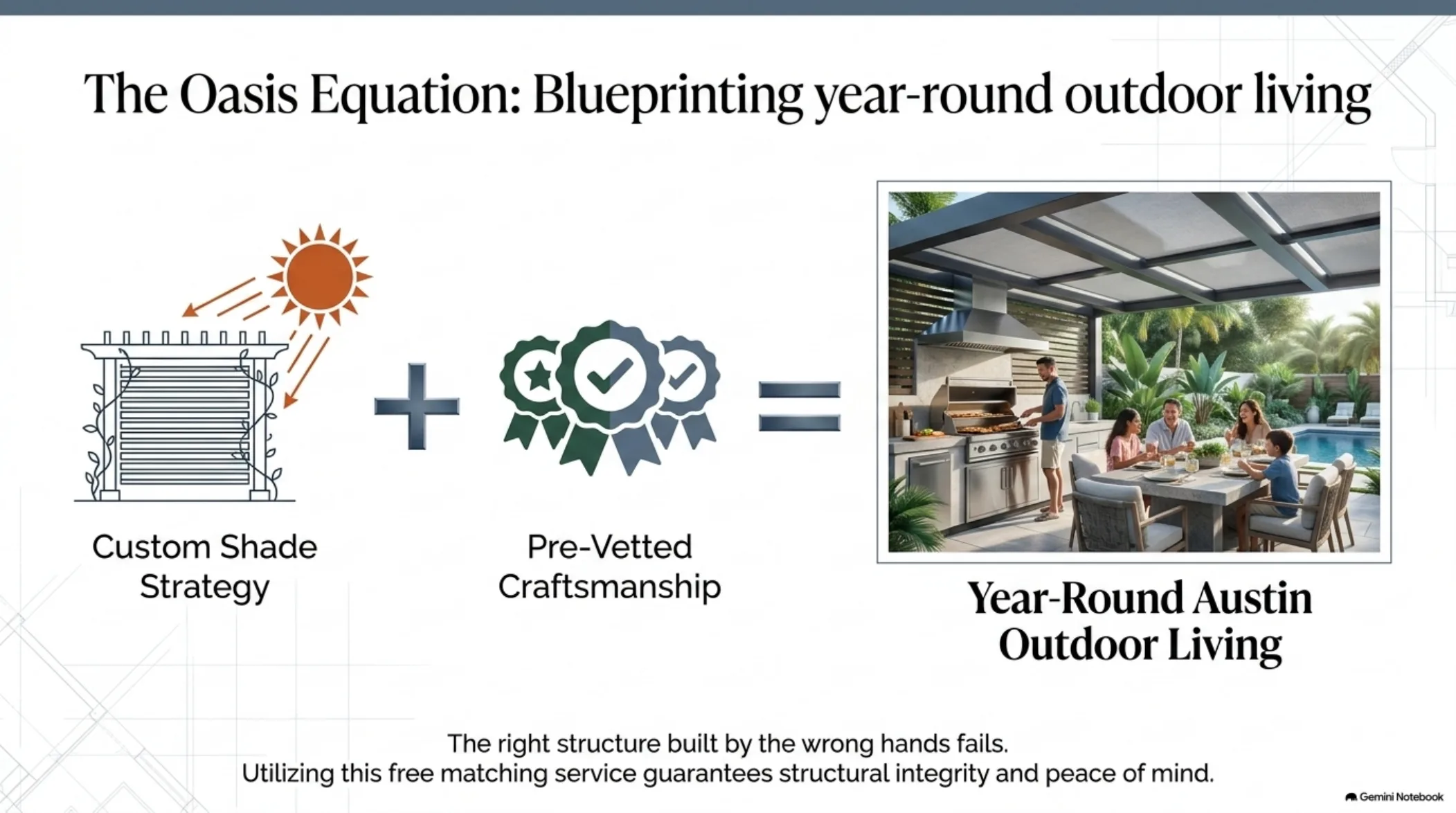
The synthesis slide states the equation: Custom Shade Strategy plus Pre-Vetted Craftsmanship equals Year-Round Austin Outdoor Living. The right structure built by the wrong hands fails — so the matching service guarantees structural integrity and peace of mind. Design without execution is a drawing; execution without design is a gamble. Both halves of the equation have to be right.
Slide 10 — The First Step
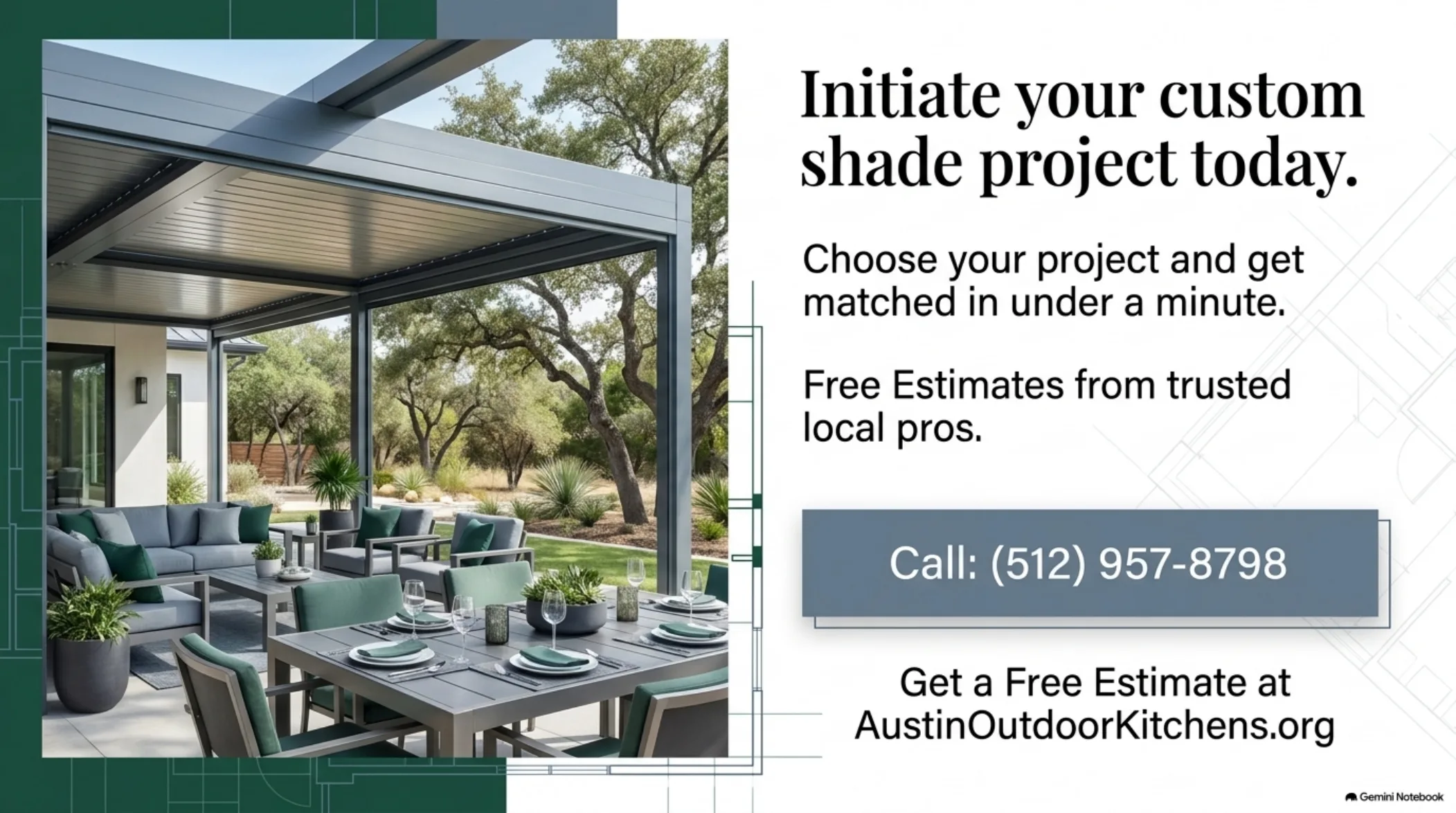
The closing slide turns the deck into action: initiate the custom shade project today. Choose the project and get matched in under a minute, with free estimates from trusted local pros — and the contact line is right there: (512) 957-8798, or austinoutdoorkitchens.org. For Austin homeowners, the path from an unusable summer patio to a year-round backyard runs through two decisions — the right structure, and the right builder. The deck's whole argument is that the second one is now the easy one to make.